Asakai.org
ASAKAI
What is Asakai?
Asakai is a short yet highly impactful evaluation and communication meeting held at the start of each working day in manufacturing operations.
Conducted directly on the production floor, these meetings ensure that all teams are aligned on the same goals, the previous day’s performance is assessed objectively, and daily operations begin with a clear and structured plan.
From the perspectives of quality, efficiency, occupational safety, and continuity, Asakai is one of the fundamental components of a disciplined management model. With the participation of both managers and operators, it serves as a communication platform that enables transparent and rapid information flow.
History of Asakai

The origins of Asakai trace back to Japan’s manufacturing culture, particularly the Toyota Production System (TPS). At the core of TPS lie continuous improvement (Kaizen), waste reduction (Muda), and standardized work methods. In line with these principles, Asakai meetings were introduced as a way to monitor daily operations in real time and address issues immediately.
Japan’s work culture emphasizes discipline, transparency, team cohesion, and process-oriented thinking. Asakai is a direct reflection of this cultural mindset.
Within Toyota, Asakai meetings have long been an essential component of production management, and today they are recognized among the “best manufacturing practices” across many industries worldwide. The sustainability of a continuous improvement culture relies on a strong connection between the shop floor and management. Asakai is one of the most effective mechanisms for keeping this connection active on a daily basis.
Purpose and Philosophy
The primary purpose of Asakai meetings is to ensure that all teams within the organization share the same perspective and that production processes are managed using up-to-date data.
This approach is based on three main philosophies:
TRANSPARENCY
All teams can evaluate processes clearly and transparently, and view performance indicators, issues, stoppages, and targets on a shared platform.
FAST AND ACCURATE DECISION-MAKING
Managing operations with real-time information from the shop floor instead of delayed feedback; identifying issues before they escalate and resolving them by analyzing their root causes.
CONTINUOUS IMPROVEMENT (KAIZEN)
Asakai is not just a reporting meeting; it is also a mechanism that drives improvement within the organization. Daily evaluations ensure that even minor disruptions in processes are noticed, contributing to continuous improvement.
The Value Asakai Brings to Organizations
Implementing Asakai provides organizations with multidimensional value:
✔ Increased Operational Efficiency
Root causes of stoppages are identified more quickly, production plans are formed more accurately, and unnecessary repetitions in processes are prevented.
✔ Real-Time Information Flow
Meetings conducted based on up-to-date data give managers and teams a clear view of the shop floor. This enables more effective planning, problem-solving, and coordination.
✔ Strengthened Team Communication
Daily gatherings of production, maintenance, quality, and management teams reinforce a shared sense of goals and enhance cross-functional collaboration.
✔ Early Detection of Errors and Risks
Reviewing the previous day’s issues ensures potential errors and quality risks are addressed before they escalate.
✔ Standardization and Discipline
Meetings held in the same format every day instill discipline in process management. Over time, all teams develop a habit of working in a structured manner.
✔ Establishment of a Continuous Improvement Culture
Asakai fosters a sustainable culture of improvement within the organization. Small but consistent steps lead to significant long-term achievements.
Asakai Meeting Structure
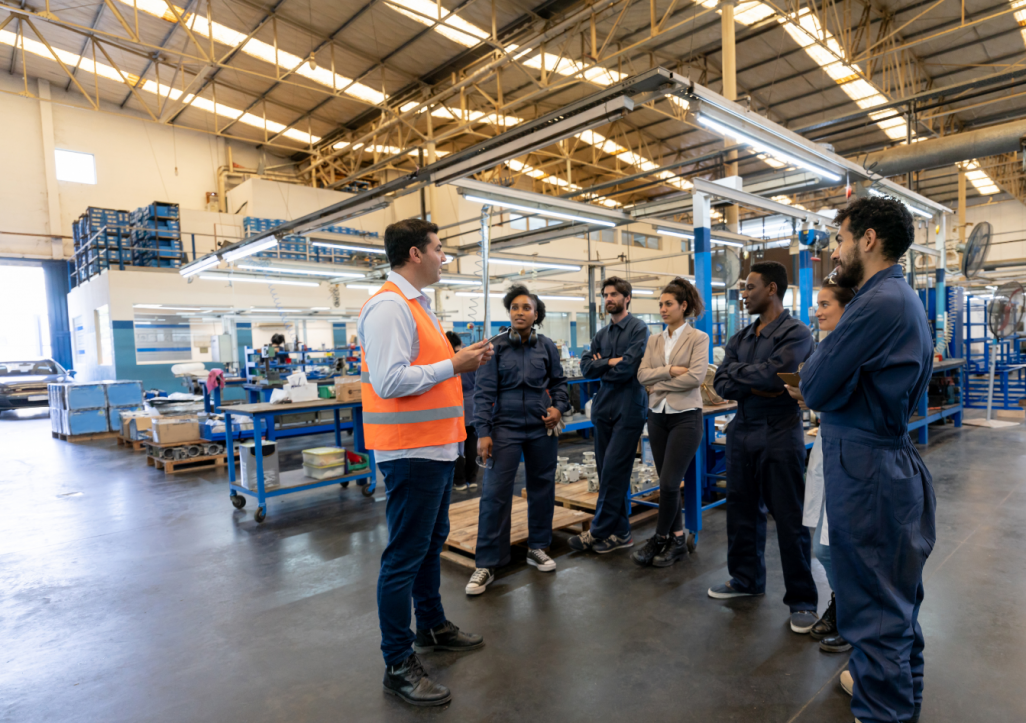
Asakai meetings are conducted standing up, on the production floor (Gemba), and following a standardized format. The goal is to provide a fast, clear, and shared perspective on daily operations. Therefore, the meetings are kept short, typically lasting 10–20 minutes.
They are held at the same time every day: A consistent schedule ensures operational discipline and helps all teams start the day with the same focus.
Representatives from all relevant departments participate: By including production, maintenance, quality, planning, and other support units, processes are evaluated holistically.
Data is reviewed through visual boards: Performance indicators, stoppages, quality data, and other critical information are conveyed clearly and quickly via digital or physical visual boards.
Delays and unnecessary details are avoided: The meeting serves as a focused and efficient communication forum where only operationally critical information is shared.
Actions are recorded with owners and deadlines: Clear responsibilities are assigned for identified issues, target dates are set, and follow-up is conducted. This makes the improvement process transparent and traceable.
This structure creates a disciplined, fast, and effective communication environment in both production and support processes, directly enhancing the organization’s daily performance.
SQDPS Format
SQDPS is a management format used in Asakai meetings that enables daily performance to be systematically evaluated under five main categories. This structure ensures that the organization’s critical processes are addressed with the same discipline every day and supports the continuity of a culture of improvement.
SQDPS consists of the following sections:
S – Safety
Safety is the first and most prioritized section of SQDPS. Its goal is to ensure that all employees on the shop floor work in a safe environment and to identify risks at an early stage.
Topics evaluated include:
Workplace accidents or near-miss incidents from the previous day
Safety risks identified on the shop floor
Personal protective equipment (PPE) usage
Results of safety audits
Urgent corrective actions
This section represents the daily application of the “zero-accident” approach.
Q – Quality
The Quality section ensures that the product is evaluated in terms of compliance, accuracy, and alignment with customer expectations.
Topics evaluated include:
Quality defects from the previous day
Scrap and waste amounts
Customer complaints or internal quality alerts
Quality control reports
Critical issues requiring root cause analysis
The goal is to minimize quality losses and enhance process reliability.
D – Delivery (Production / Delivery Performance)
The Delivery section ensures daily monitoring of adherence to production targets.
Topics evaluated include:
Comparison of actual production versus planned targets
Delayed tasks and bottleneck points
Stoppages due to supply or material shortages
Shipment risks
Clarification of the day’s production plan
This section is critical for ensuring reliable customer deliveries.
P – Productivity
Productivity covers equipment, workforce, and process performance.
Topics evaluated include:
OEE (Overall Equipment Effectiveness), performance, and cycle times
Stoppage durations and categories
Lean manufacturing indicators
Overtime requirements or production capacity risks
Improvement opportunities
The goal is to ensure the most efficient use of production resources.
S – 5S & Sustain (Organization, Cleanliness, and Sustainability)
The final section of SQDPS focuses on maintaining order and work standards on the shop floor.
Topics evaluated include:
5S audit results (Seiri, Seiton, Seiso, Seiketsu, Shitsuke)
Machine and area cleanliness
Up-to-date visual management boards
Disorganization or potential risk areas
Sustainability of compliance with standards
This section ensures that the production culture continues in a disciplined and standard-focused manner.
The Contribution of SQDPS to the Organization
This format makes Asakai more efficient, focused, and measurable.
With SQDPS:
All critical processes are evaluated daily with the same discipline and transparency
Risks are detected early
Action tracking becomes clear
Teams establish a common management language
The culture of continuous improvement is strengthened
Asakai Meetings: Roles and Responsibilities
The effectiveness of Asakai meetings depends on clearly defined participant roles and a clear understanding of responsibilities. Each team member is assigned tasks that contribute to the flow of the meeting. The key roles and responsibilities are as follows:
Meeting Leader / Plant Manager / Operations Manager
Responsibilities:
Ensure the meeting starts on time and proceeds in a disciplined manner
Manage the flow according to the SQDPS format
Coordinate information from all departments and prioritize critical issues
Guide decision-making processes and ensure actions are assigned to responsible individuals
Plan the follow-up of actions at the end of the meeting
Department Representatives (Production, Maintenance, Quality, Planning, Logistics, etc.)
Responsibilities:
Prepare and present their department’s daily data
Share problems clearly and concisely
Provide necessary recommendations for actions
Communicate meeting decisions to their department and ensure implementation
5S and Shop Floor Organization Officer
Responsibilities:
Report on the compliance of the production area with organization and cleanliness standards
Ensure visual management boards are up-to-date
Monitor the continuity of standard practices
Track adherence to shop floor safety and environmental criteria
Note Taking / Action Tracking Officer
Responsibilities:
Record decisions, actions, and responsible individuals during the meeting
Clearly define deadlines and ensure follow-up
Update the action list daily and prepare it for the next meeting
Share the status of actions with the leader and team at the end of the meeting
Participating Employees
Responsibilities:
Attend the meeting on time and contribute actively
Share observed shop floor issues
Fulfill their tasks according to actions and decisions
Provide suggestions for process improvements and continuous development
Importance of Role Allocation
Each role ensures the meeting proceeds in a disciplined and efficient manner
Clearly defined responsibilities increase the implementability of actions
All team members understand they are part of the process, encouraging active participation
This structure enables the organization to manage daily operational efficiency, quality, and safety sustainably
Action Management and Reporting
One of the key outcomes of Asakai meetings is translating decisions into actionable tasks and tracking them effectively. Action management and reporting are critical mechanisms that make the value of the meetings tangible.
1. Identification of Actions
Every issue, observation, or improvement opportunity should be translated into clear action items during the meeting.
Actions must be measurable, specific, and feasible.
For each action, a responsible person or team is assigned, and the task definition is clearly specified.
2. Action Tracking
After the meeting, actions are recorded in the daily action list and monitored on visual boards.
At the beginning of each meeting, the status of the previous day’s actions is reported briefly and clearly: completed, ongoing, or delayed actions.
Responsible individuals regularly update the progress of actions and provide necessary resources.
During the meeting, delayed or incomplete actions are reviewed again, and a new plan is created if necessary.


3. Reporting and Visualization
Actions and results are shared through visual boards or digital dashboards.
Reporting goes beyond simply listing actions; it also highlights progress, completion percentages, and critical delays.
This approach increases transparency among teams and ensures that everyone is informed about the importance and status of each action.
4. Contribution of Action Management
Ensures that meeting decisions are translated into actionable tasks.
Increases accountability and responsibility.
Supports a culture of continuous improvement.
Converts operational efficiency, quality, and safety goals into tangible results.
Creates a disciplined and sustainable improvement mechanism across the organization.
AI-Enhanced Reporting
Traditional Asakai meetings enable quick sharing of shop floor information and real-time improvement of daily operations. However, manual data collection, compiling information from multiple sources, and tracking actions often lead to time loss, incomplete information, and delays.
AI-supported Asakai transforms this process into a more holistic and intelligent system. Production data, quality performance, safety indicators, and operational actions are analyzed in real time. Artificial intelligence detects trends, automatically highlights deviations, and provides prioritized recommendations for critical areas. This allows meetings to focus on decision-making rather than data reading.
Additionally, the system generates predictive reports by comparing historical data with the current day, highlighting the causes of recurring stoppages, quality losses, or productivity declines early. Action management is integrated into this framework, enabling real-time monitoring and reporting of responsible parties’ progress.
This approach transforms Asakai into a faster, more visible, and more effective process without compromising its cultural discipline.
Get in Touch with HyperwiseAI
We are continuing our work on enhancing Asakai processes with artificial intelligence. We would love to include your valuable insights in the development process.
If you have a process you want to improve, a feature you’d like to add, or any ideas to share, you can leave us a message.
Let’s design a more efficient and smarter operations management together.
